The Electrolyte Gold Rush: A Hot Trend Isn’t a Brand Strategy
Electrolytes are having a moment
What the booming hydration market reveals about CPG branding, consumer demand, packaging design, pricing and retail success.
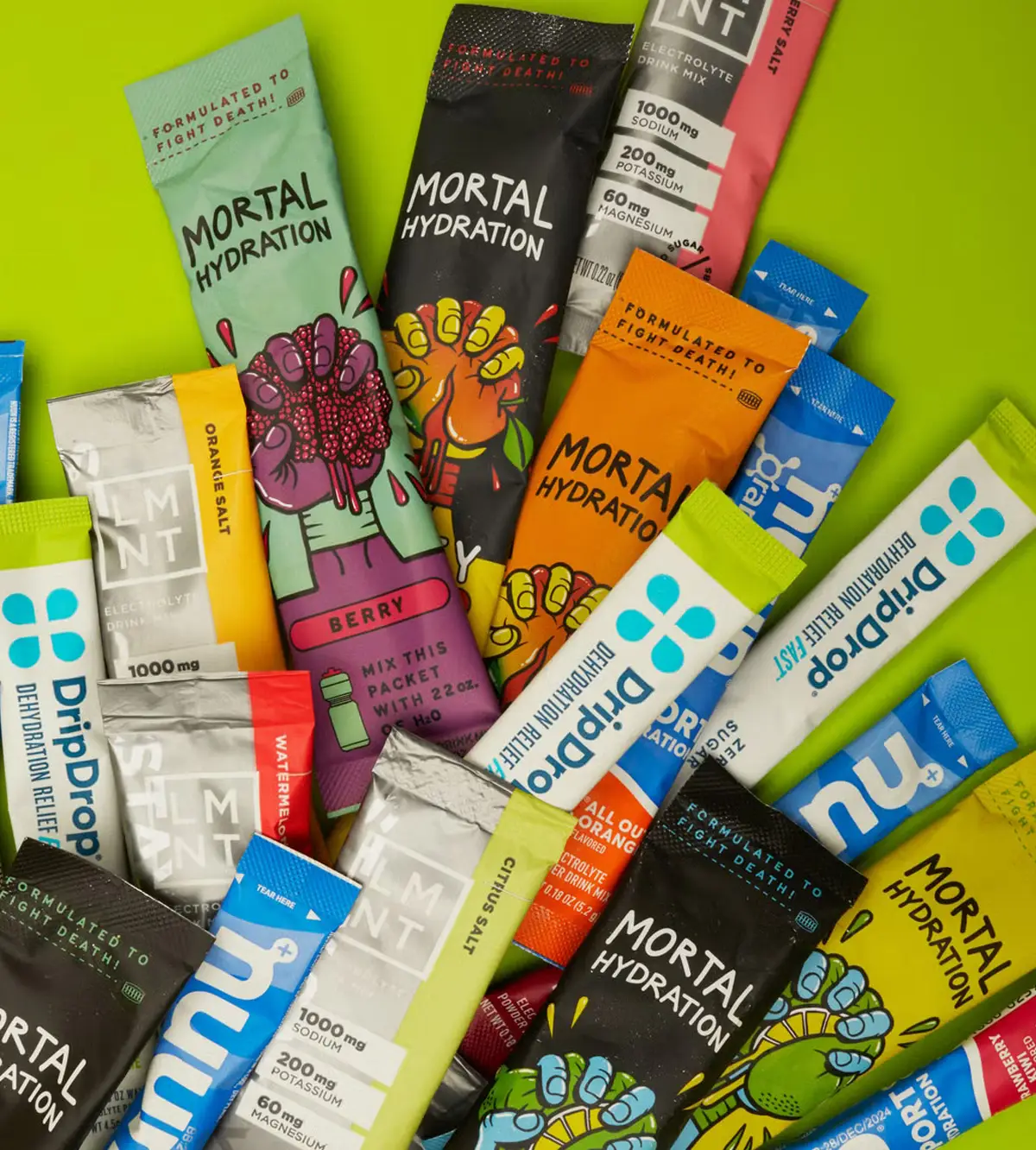
Electrolytes are having a moment. Once associated primarily with athletes, endurance sports, and recovery, electrolyte powders and hydration drinks have become everyday wellness products. They’re appearing in grocery stores, supplement aisles, gyms, and social media feeds, promising everything from better hydration to improved performance.
And the market is growing. According to BevNET’s 2026 industry reporting, powdered drink mixes have been growing at twice the rate of liquid beverages over the previous four years. For an entrepreneur looking for the next big CPG opportunity, the attraction is obvious.
Learn how to develop an electrolyte powder. Use high-quality ingredients. Create some interesting flavours. Design beautiful packaging. Price it competitively. Get it into retail.
Sounds like a promising business. But there’s one rather important question. Why would anyone buy yours?
It’s a question that applies far beyond the hydration category, and one that every consumer packaged goods (CPG) entrepreneur should answer before investing heavily in building a brand.
A Growing Market Doesn’t Guarantee Demand for Your Product
When a category starts gaining momentum, entrepreneurs naturally see opportunity. Plant-based foods. Functional beverages. Protein snacks. Adaptogens. Mushroom coffee. Electrolytes.
We’ve seen plenty of CPG trends create genuine demand and exciting new businesses. But we’ve also seen entrepreneurs confuse consumer interest in a category with consumer demand for their particular product.
Let’s look at the electrolyte market.
Established brands such as Liquid I.V., LMNT, Nuun, and Gatorade already occupy valuable positions in consumers’ minds. They have distinct formulations, established audiences, extensive distribution networks, and considerable marketing resources.
A new entrepreneur enters the market with an electrolyte powder containing sodium, potassium, magnesium, natural flavours, and perhaps a few additional functional ingredients they believe make it stand out. The formulation might be excellent. But is the excellent formulation relevant? And more importantly, who exactly is it excellent for?
If consumers already have access to dozens of similar products, another electrolyte powder isn’t automatically an innovation. It may simply be another option in an increasingly crowded category.
Market growth tells you that people are buying. It doesn’t tell you why they’ll buy from you.
That’s where effective CPG brand strategy begins.
Your Product’s Features Aren’t Necessarily Its Selling Points
Entrepreneurs understandably become attached to the details of their products. The ingredient sourcing. The formulation. The manufacturing process. The nutritional profile. The science behind it. These details matter, but they aren’t always what motivates consumers to make a purchase.
Imagine two electrolyte brands.
One promises a premium blend of essential minerals with carefully sourced ingredients and advanced hydration support.
The other has built a compelling brand story around competitive endurance athletes who spend hours training, lose significant electrolytes through heavy sweating, and need reliable hydration products that are independently tested for substances banned in competitive sport.
The second brand isn’t simply selling electrolytes. It’s addressing a specific need, speaking to a clearly defined audience, and offering an additional layer of confidence that matters to them.
That’s the difference between communicating product features and building a meaningful brand proposition. That doesn’t automatically make it the better product. But it gives the consumer a more immediate understanding of its relevance to them.
Relevance is what makes differentiation valuable. Consider a product that introduces an entirely new format into an established category. The entrepreneur sees an exciting innovation, but the consumer sees something unfamiliar. What exactly is it? When would they use it? And why should they choose it over a product they already know and trust?
If shoppers can’t immediately understand the product’s purpose or value, what the founder considers its greatest innovation can actually become a barrier to purchase.
So if an entrepreneur wants to build a CPG brand, they need to understand what consumers are actually buying. Is it a functional benefit? Convenience? Taste? A healthier alternative? Those are very different consumer motivations, and they lead to very different brand positioning strategies.
The goal isn’t to convince everyone they need your product. It’s to identify the people who have a meaningful reason to want it. Being different might get someone’s attention. Being relevant gives them a reason to buy.
Competitive Analysis Goes Far Beyond Comparing Packaging and Prices
One of the most important stages of developing a CPG brand is understanding the competitive landscape. And that doesn’t mean simply collecting screenshots of competing products and comparing their packaging colours, claims, ingredients, and MSRP.
A proper competitive brand analysis explores the broader environment in which purchasing decisions happen.
Who owns the premium end of the market? Which brands are competing primarily on price? What consumer needs are underserved? Which benefits have become standard category expectations? What messages are competitors repeating? Where are they genuinely differentiated? And what opportunities remain for a new brand to establish its own position?
In the electrolyte category, claims such as sugar-free, naturally flavoured, clean ingredients, and essential minerals are common. These might be desirable product attributes, but they aren’t automatically competitive advantages. If every brand uses similar language, consumers have very little to distinguish one from another.
The challenge becomes finding a meaningful position within the category rather than simply replicating what’s already selling. Yet still be relevant.
Your competitors aren’t necessarily limited to other brands in your specific category. Depending on the intended consumer, the alternatives might include coconut water, flavoured water, or plain old tap water. Your competition is whatever consumers currently choose to satisfy the same need.
Understanding those alternatives, and the behaviour behind them, can reveal far more valuable opportunities than simply designing a package that looks different.
Foundational Brand Messaging: The Strategy Before the Design
This is where many emerging CPG businesses would benefit from doing more work before jumping into creative development. Brand strategy isn’t just about developing a mission statement or writing an inspiring story about the founder.
It’s about establishing a clear, credible, and compelling reason for the brand to exist in a competitive marketplace.
Strong branding agency work defines things not limited to the target audience, positioning, unique value proposition, personality, and core messaging that will guide the business. It also establishes what the brand should—and shouldn’t—communicate.
For an emerging electrolyte brand, that means answering questions such as:
- Who specifically are we trying to reach?
- What need, desire, or problem does our product address?
- Why should consumers choose us instead of an established competitor?
- What genuinely makes our product different?
- What genuinely makes our product relevant?
- Which benefits are meaningful enough to influence a purchasing decision?
- Can we communicate that value clearly and convincingly?
- Is there a brand story?
These answers should shape everything from the brand name and visual identity to packaging design, website content, marketing campaigns, and retail sales presentations. Without that foundation, creative development becomes an exercise in making a product look appealing without necessarily knowing what makes it worth buying. And that’s an expensive way to discover a positioning problem.
Your Packaging Design Has Seconds to Make Its Case
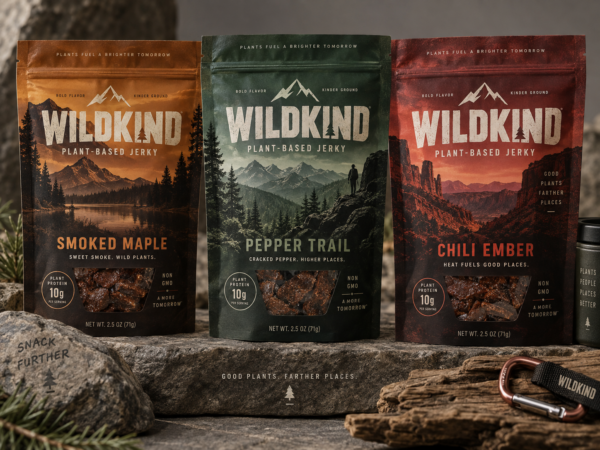
Imagine standing in front of a retail shelf or scrolling Amazon pages filled with electrolyte powders. There are brightly coloured pouches, minimalist white tubs, energetic typography, illustrations, metallic finishes, and endless combinations of blues, greens, and vibrant citrus colours.
Every package is trying to catch your attention. But getting noticed is only part of the job. Effective CPG packaging design needs to turn attention into understanding.
A shopper should be able to quickly recognize what the product is, what makes it relevant, and why it deserves consideration. Too often, packaging becomes a collection of competing messages. “Sugar-free. Vegan. Non-GMO. Natural flavours. Magnesium. Potassium. Performance. Recovery. Hydration. Wellness.” Add a handful of icons, an inspirational tagline, a prominent logo, and perhaps a lengthy paragraph about the founder’s vision.
The package may contain plenty of information, but the central selling proposition gets lost. This is why on-pack messaging hierarchy is so important. If the product is intended for endurance athletes, communicate the clear benefit that matters to them, in a language they will understand.
The objective is to help the consumer make a purchasing decision.
The MSRP Trap: Price Doesn’t Equal Perceived Value
It’s easy to get excited about the potential margins of a new CPG product, especially when similar products are commanding premium retail prices.
Imagine you develop an electrolyte powder that costs $8 per box to manufacture and package. Competing products retail for $30, so you establish a similar MSRP. On paper, the numbers look promising. But retail economics tell a different story.
If a retailer requires a 35% margin and a distributor requires another 25%, the brand receives approximately $14.63 per box. After the $8 production cost, just $6.63 remains to cover freight, warehousing, promotions, marketing, overhead, spoilage & markdowns, and profit.
Those margins are illustrative, but the lesson is important: Your MSRP isn’t your revenue, and your competitor’s price isn’t proof that consumers will pay the same for your product.
An established brand may command a premium because it has spent years building recognition, trust, and customer loyalty. Consumers understand what they’re getting and why it’s worth the price. An emerging brand has to establish that value from scratch.
And this is where brand strategy becomes particularly important. Pricing isn’t simply about what a product costs to manufacture or what competitors are charging. It’s also about what consumers believe the product is worth.
A clear, compelling brand proposition helps communicate that value. It identifies the benefits that matter to the target audience, establishes meaningful differentiation, and gives consumers a reason to consider paying more—or switching from a familiar alternative.
Great branding can’t rescue an unsustainable business model or manufacture value that doesn’t exist. But without a strong brand position, even a genuinely superior product can struggle to justify its price.
Before asking what consumers will pay, establish why they’ll believe your product is worth paying for.
Getting Into Retail Isn’t the Same as Selling Through Retail
For many emerging CPG entrepreneurs, securing retail distribution feels like the ultimate milestone. Getting into a regional grocery chain or landing a national distributor can open exciting opportunities. But there’s a fundamental difference between getting a product onto the shelf and getting it off the shelf.
Retailers aren’t simply looking for innovative products. They’re looking for products that sell consistently and earn their space. That’s why retail sales velocity—the rate at which products sell within retail locations—is such an important measure of success.
A brand selling consistently through 25 stores may have a stronger foundation than one struggling to move inventory across 250.
But what actually influences that initial purchasing decision? Imagine a consumer encountering your product for the first time, surrounded by competing brands they already recognize. They aren’t going to read your business plan, explore your website, or listen to your carefully prepared sales pitch. They have a few seconds to decide whether your product deserves their attention.
Your packaging needs to make the case for you.
It needs to communicate what the product is, who it’s for, what makes it different, and why someone should choose it over the alternatives. That’s a lot of responsibility for a package, and exactly why strategic positioning and foundational brand messaging need to be established before creative development.
When the brand proposition is clear, packaging can communicate it through purposeful typography, visual hierarchy, colour, imagery, and concise, compelling on-pack messaging.
When the proposition is unclear, even beautiful packaging can leave consumers wondering why they should buy. And while effective packaging can help encourage initial trial, the product itself needs to deliver on the promise to earn repeat purchases.
Brand strategy establishes the promise. Packaging communicates it. The product has to deliver it. When those three elements work together, a business has a much stronger foundation for building recognition, consumer trust, and sustainable retail growth.
Brand Strategy Should Challenge the Idea and You, Not Just Listen to What You Think and Make It Look Good
At Zesty Brands, we believe branding should begin with understanding the business behind the product. Before developing creative concepts, we explore the category, the target consumer, competitive positioning, the brand’s strengths, and what makes its offering meaningfully different. We hone your Zest Factor™ — The authentic, distinctive combination of attributes, benefits, personality, and purpose that makes a brand worth choosing.
And importantly, it isn’t something we simply invent to make a product sound more exciting. It needs to be grounded in something real.
Sometimes our strategic exploration confirms the founder’s original vision. Other times, it raises more challenging questions. Perhaps the ingredient they consider revolutionary isn’t particularly meaningful to consumers. Perhaps their proposed audience is too broad, or even dead wrong.
Perhaps the competitive landscape is far more saturated than anticipated. Or perhaps the product needs further market validation before a substantial investment in branding, packaging, and retail expansion makes financial sense. Those discoveries are just as valuable as an exciting new brand identity. Because the purpose of brand strategy isn’t simply to make an idea look successful. It’s to help establish a meaningful market position and build the brand around something consumers have a reason to value.
The purpose of a brand strategy is to help establish a meaningful market position and build the brand around something consumers have a reason to value.
That distinction matters. A branding and packaging design studio cannot guarantee demand, profitability, or retail success. But a strategic approach can help entrepreneurs make more informed decisions, avoid confusing product features with consumer benefits, and communicate their offering far more effectively.
Don’t Chase the Trend. Find Your Place in the Market.
There’s nothing wrong with entering a growing CPG category. Electrolytes are a legitimate market with real consumers, established demand, and opportunities for innovation. And there’s certainly room for emerging brands to challenge established players.
But opportunity needs to be identified, not assumed. A growing category doesn’t guarantee demand for another product. A unique formulation doesn’t guarantee meaningful differentiation. A beautiful package doesn’t guarantee sales. A competitive MSRP doesn’t guarantee profitability. And securing retail distribution doesn’t guarantee customers will come back.
The strongest CPG brands connect consumer needs with a compelling product proposition, clear foundational messaging, distinctive packaging design, realistic economics, and a thoughtful approach to retail growth.
Build a Brand that is Different and Relevant
At Zesty Brands, we specialize in CPG brand strategy, brand identity, and packaging design for food, beverage, health, and consumer product businesses. We help emerging and established brands uncover their unique Zest Factor, establish meaningful competitive positioning, and create compelling packaging systems that connect with consumers.
Because great branding isn’t just about standing out. It’s about giving people a reason to choose you.